A student in Ilion missed school for a week. When he finally returned to class, he explained that he hadn’t had access to a washing machine, and he couldn’t come to school in dirty clothes.
Another student — a 9-year-old in Rochester — missed school because he felt the need to stay home to protect his mother in a house with no locks.
These are just two of the stories captured in 1 in 5, a new long-form NYSUT film about the devastating impact of childhood poverty in New York State.
New York State is one of the wealthiest regions in the world — a global leader in industry, finance and innovation. Yet, one in five children in this state lives in poverty; meaning that more than 760,000 students aren’t getting their basic needs met.
The number of families living in poverty in New York has grown 10% since 2010. The number struggling to make ends meet has grown even faster, at 21%.
Every day, educators see first-hand how unmet basic needs keep their students from thriving, and NYSUT’s timely film — which took a year to complete and includes the voices of educators, parents, and advocates — explores the stark reality these students face in rural, suburban and urban communities.
In the film, Zachary Arenz, music teacher and member of Rochester Teachers Association, talks about how what happens to students at home bleeds into their academic life, and keeps them from reaching their full potential.
“I’m honored to have had even a small part in this project,” Arenz said of the film. “1 in 5 reflects what educators are seeing every day: that students’ academic success is often tied to their lived experiences, and that meaningful change will require partnership between schools, families and policymakers.”
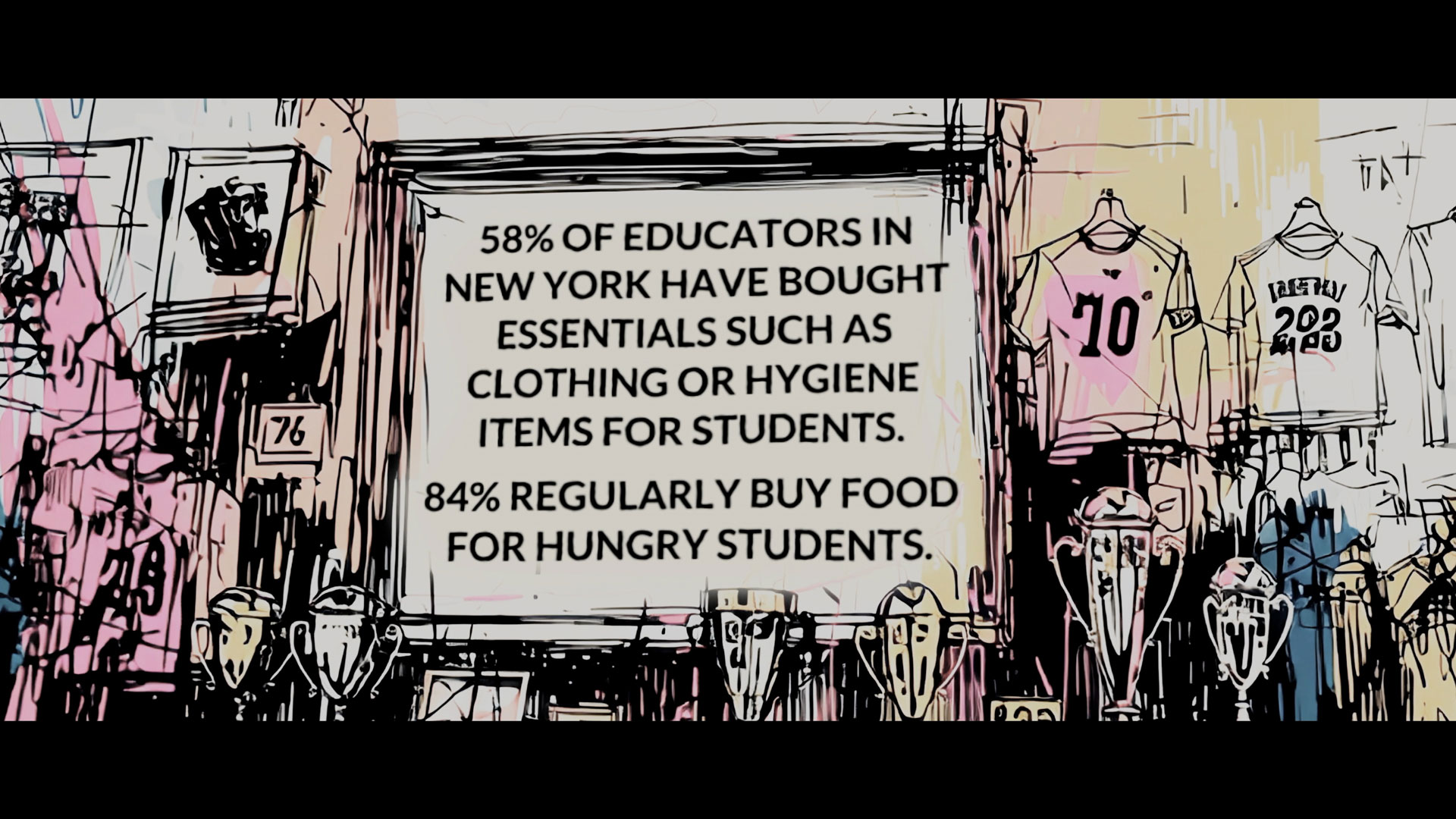
The film also captures the perspectives of teachers at Syracuse STEM at Blodgett Middle School where 95 percent of students live below the poverty line; Syracuse has the worst childhood poverty rate in the U.S. among larger cities.
“I feel like subconsciously our kids deal with, ‘I’m not meant to be here. I’m not loved. No one really cares about me,’” said Leeza Roper, ELA teacher and member of Syracuse Teachers Association.
The film also shows to what lengths dedicated educators are going every day to help address poverty’s effects on their students, including clothing closets, coat drives, food distribution programs, back-pack programs, and more. Finally, the film introduces some of the most promising policies for addressing this issue, including community schools, which have proven to be remarkably successful when it comes to improving student outcomes.
“One of the most effective tools we have is the community schools model. Community schools serve as vital hubs, providing wraparound services that support family health, community safety and children's needs,” said NYSUT President Melinda Person.
From dental and eye exams and community food pantries to free childcare and housing assistance, these schools provide services tailored to their community's specific needs, and they are led by a community schools director or coordinator, who connects families directly with services, Person said.
Currently, there is no dedicated source of state funding for community schools, but NYSUT is asking the state legislature to provide $100 million in categorical aid to expand community schools, $4 million to sustain UFT’s network of community schools; and $5 million for the United Federation of Teachers’ United Community Schools to provide statewide technical assistance and support.
NYSUT is also asking for legislators to support the executive budget proposal to continue New York’s Universal School Meals program, which provides free breakfast and lunch to all students.
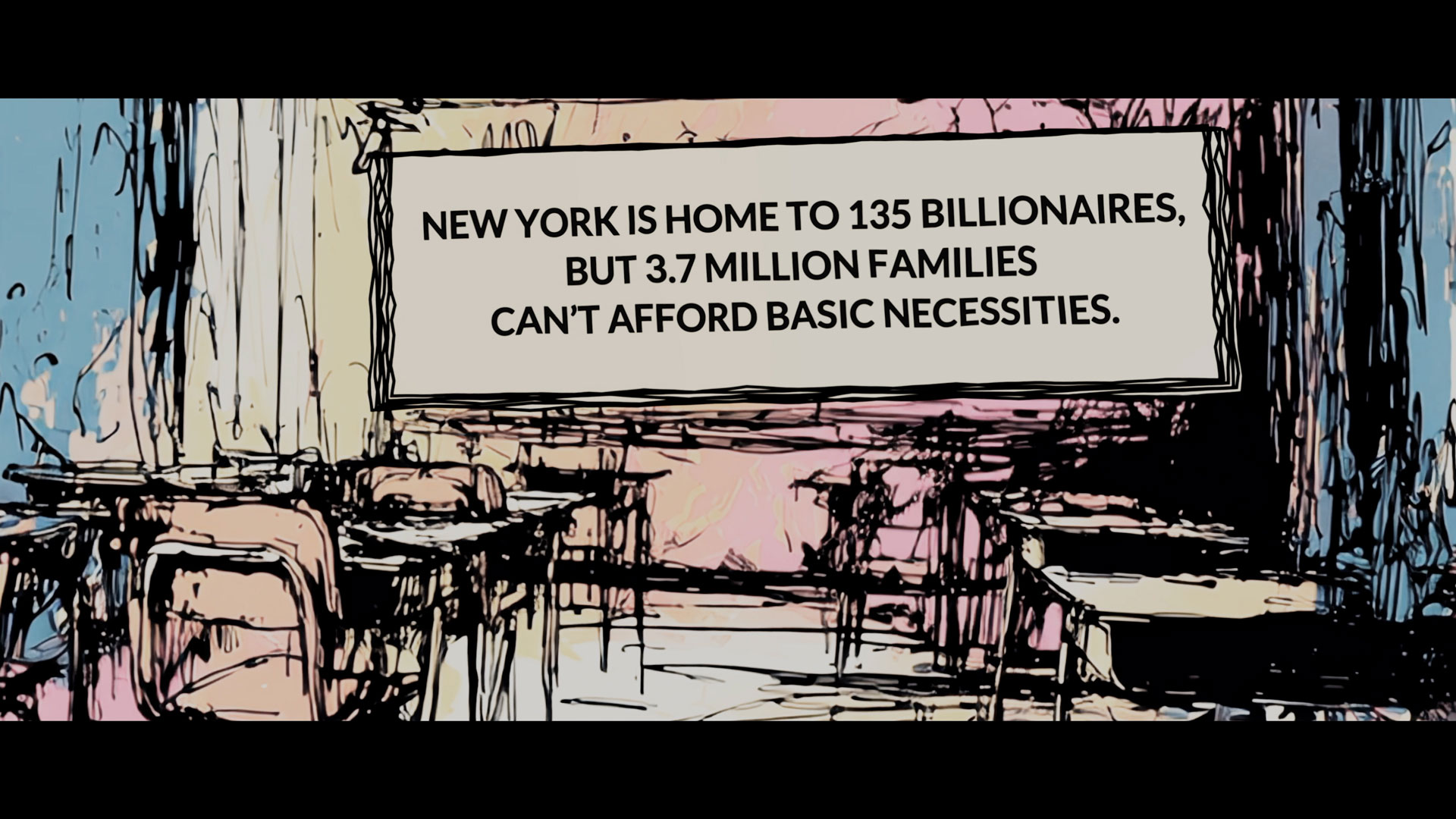
NYSUT is also pushing for other policy measures to close New York’s growing wealth inequality, including increasing income tax on the ultra-wealthy and increasing corporate taxes by 1.9 percent, on par with neighboring states.
The film was shown to legislators at an exclusive screening at the Legislative Office Building in February and received positive feedback. In the coming months, NYSUT will be releasing this film across the state as part of its “1 in 5” campaign.
"Poverty is not inevitable. We can do something about this. We can get change made, and we’re going to do it,” said Person.
1 in 5 is available for viewing at 1in5ny.org, where there are also other resources about child poverty and potential policy solutions.