Today’s students spend an average of 8.5 hours a day watching screens but freely admit that they don’t always have the skills needed to analyze what they’re seeing.
This troubling paradox — high levels of exposure, coupled with no protections — is leading many educators to call for an increased focus on media literacy skills in the classroom.
Their goal? To protect the next generation of Americans from the negative effects of media and equip students with the skills necessary to sustain our democracy.
This week marks National News Literacy Week, an event presented by the News Literacy Project that aims to highlight the importance of news and media literacy and give students the skills they need to judge for themselves what information to trust, share and base decisions on.
"In the age of social media, media literacy is inseparable from civics education. Today’s students are bombarded with information, algorithms, and misinformation from the moment they wake up,” said NYSUT President Melinda Person. “Our students must learn to verify sources, recognize bias and think critically about what they see online. These are essential skills for life and citizenship, now more than ever.”
A 2023 Pew survey found that 68 percent of high school students don't have confidence in their ability to evaluate the credibility of online information.
“We live in an information age, but we also live in a disinformation age,” said Mary Patroulis, library media specialist at Fayetteville-Manlius High School and member of the NYSUT Board of Directors. “Social media generates so much information, but a lot of it is not accurate. Even people in positions of authority are spreading misinformation, so having media literacy skills in particularly important.”
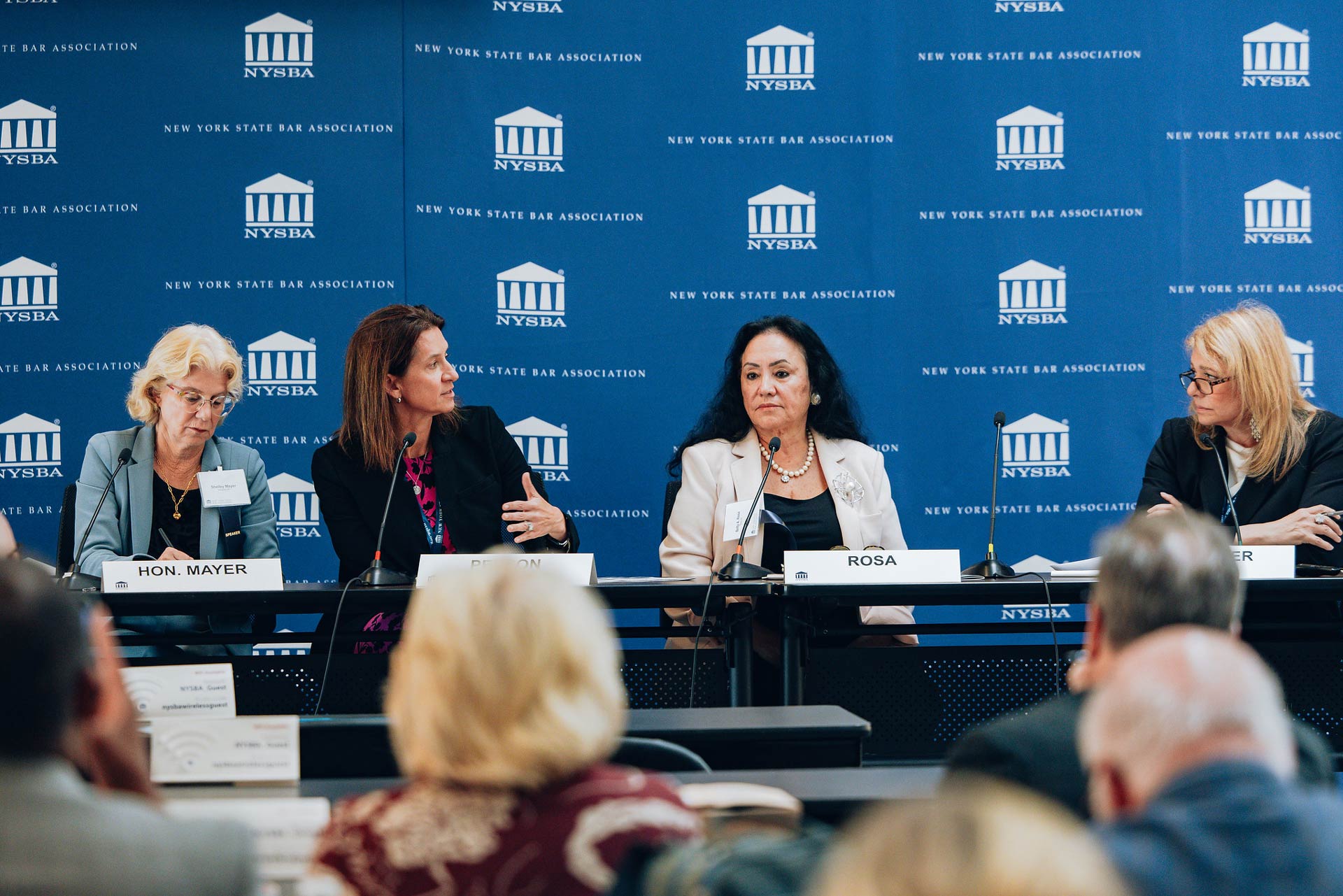 Caption: NYSUT President Melinda Person joined a panel alongside New York State Senator Shelley Mayer (left) and New York State Education Commissioner Betty Rosa (second from right) for a panel on media literacy and civics education at the New York State Bar Association. The panel was moderated by Spectrum News TV Anchor Susan Arbetter (right). Photo Credit: El-Wise Noisette.
Caption: NYSUT President Melinda Person joined a panel alongside New York State Senator Shelley Mayer (left) and New York State Education Commissioner Betty Rosa (second from right) for a panel on media literacy and civics education at the New York State Bar Association. The panel was moderated by Spectrum News TV Anchor Susan Arbetter (right). Photo Credit: El-Wise Noisette.
Caption: NYSUT President Melinda Person joined a panel alongside New York State Senator Shelley Mayer (left) and New York State Education Commissioner Betty Rosa (second from right) for a panel on media literacy and civics education at the New York State Bar Association. The panel was moderated by Spectrum News TV Anchor Susan Arbetter (right). Photo Credit: El-Wise Noisette.
According to a 2015 study by the Stanford History Education Group, now known as the Digital Inquiry Group, more than 80 percent of middle school students could not differentiate between a news story and an advertisement; more than 80 percent of high school students could not effectively distinguish between legitimate and dubious sources of information, and nearly 70 percent of undergraduate students could not effectively explain how the political agendas of different organizations might influence the content of their tweets.
Roy Rosewood, library media specialist at the High School for Construction Trades, Engineering and Architecture in Queens and a member of the United Federation of Teachers and NYSUT’s Library Media Specialists Subject Area Committee, says he sees it all the time.
“The fact that the majority of Americans, particularly young Americans, receive news via social media apps and platforms rather than through any traditional news sources, means that we have to adjust how we approach important questions of reliability and bias,” Rosewood said.
When information about vaccine skepticism, ICE raids, domestic terrorism, and even allegations about "people are eating dogs" are being shared widely, it’s tempting to take that content at face value, Rosewood said.
But he encourages his students to interrogate the information they get, even if it’s just a 15-30 second video clip, and prompts them to ask important questions: How can you tell this is a reliable source of information? Do you detect bias? How do you know it’s not misinformation or disinformation? Has this been created by a person or generative AI?
“News and media literacy is the ability to recognize the purpose for which information is being disseminated or used,” Rosewood said. “That's the practice we really want to encourage, especially as we work with students who start voting as soon as they graduate.”
Over the last decade, as the number of viral conspiracies has surged and an increasing number of nationally recognized newspapers have tanked, the number of New York schools with full-time librarians on staff has declined sharply, and less instructional time is being allotted for civics readiness and media literacy, too.
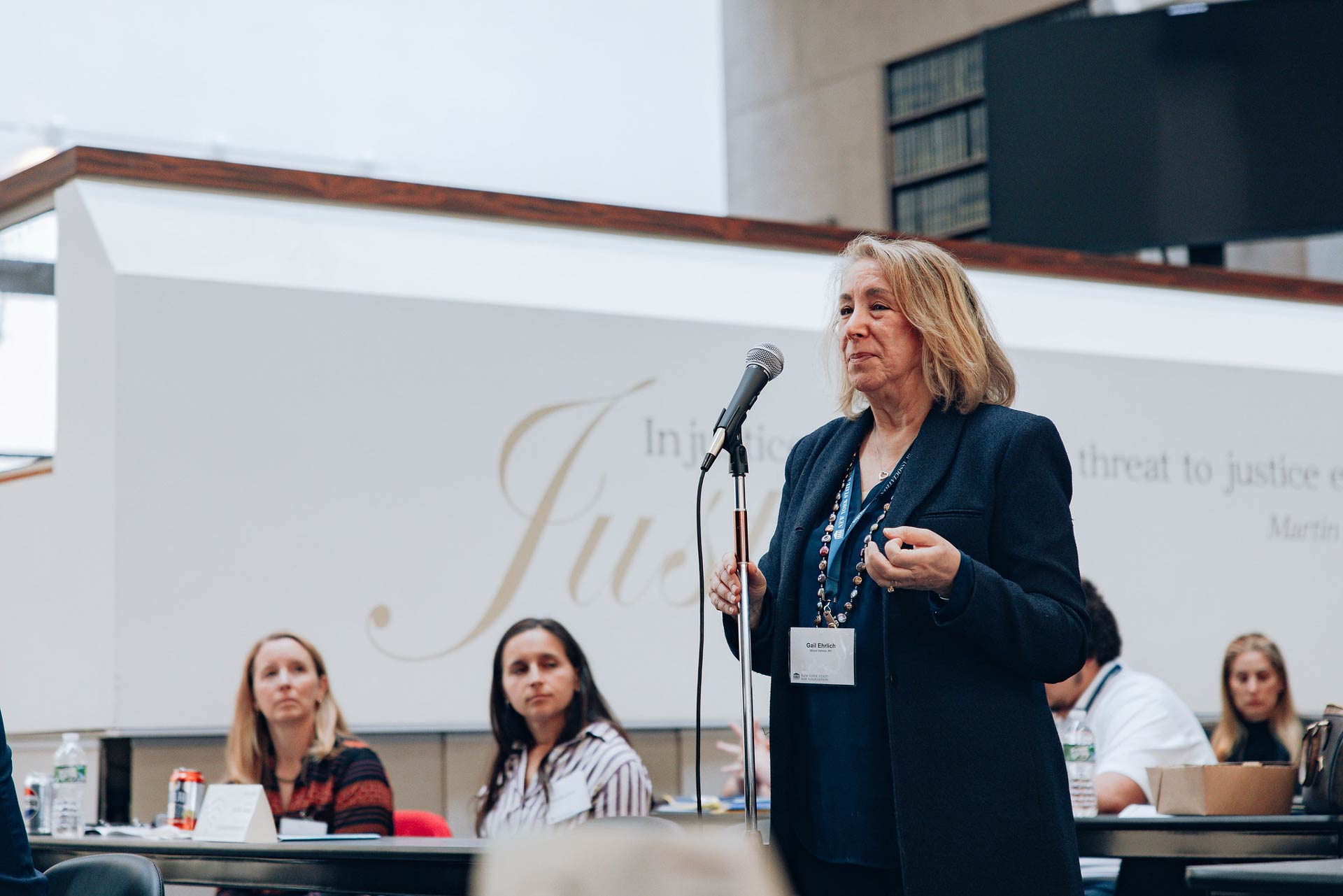 Caption: Gail Erhlich, member of UFT and DemocracyReady NY addresses media literacy panel at New York State Bar Association.
Caption: Gail Erhlich, member of UFT and DemocracyReady NY addresses media literacy panel at New York State Bar Association.
Caption: Gail Erhlich, member of UFT and DemocracyReady NY addresses media literacy panel at New York State Bar Association.
To reverse these trends and prepare the next generation of Americans to be informed participants in our democracy, NYSUT is advocating for increased focus on civics education and media literacy and calling for a certified full-time library media specialist at every school.
“Library media specialists play a unique and irreplaceable role in teaching our children how to love reading, think critically, and navigate a digital world increasingly filled with misinformation,” said Person.
Library media specialists are also the key to unlocking media literacy instruction in the classroom. Library media specialists engage with students directly to build sound, basic research skills and partner with teachers to ensure that media literacy and information skills are part of every subject from science to social studies.
“We are in a very unusual moment in that we have so many sources of information that are online that are not coming from seasoned journalists who've been trained to evaluate information, evaluate their sources, and try to bring truth to people,” said Patroulis. “People are not getting information from the same sources and debating it. They're going to the sources where they think they're going to hear what they want to hear,” she added.
Patroulis teaches students how to vet information and evaluate its reliability. At Fayetteville-Manlius School District, they have implemented a search engine product for students that only presents information that has curated and vetted, and news stories receive a credibility rating based on two independent agencies. “It helps students be more mindful about where they’re getting their information,” Patroulis said.
“One of the most critical lessons that we can teach our students right now is to question everything,” said Tara Thibault-Edmonds, a library media specialist at Rondout Valley High School and a member of the Rondout Valley Federation of Teachers and School Related Personnel and NYSUT’s Subject Area Committee for library media specialists. “And if they're not sure what they are looking at is real or true, then go somewhere else.”
To verify credibility, Thibault-Edmonds introduces her students to lateral reading, which is the practice of having a second tab open when they are reading content online, so they can look up names, sources and assertions as they encounter them in real time.
“Students have to always question what they're looking at because they just do not have the depth of knowledge to know if what they're looking at is really true,” she said.
Social studies teachers agree.
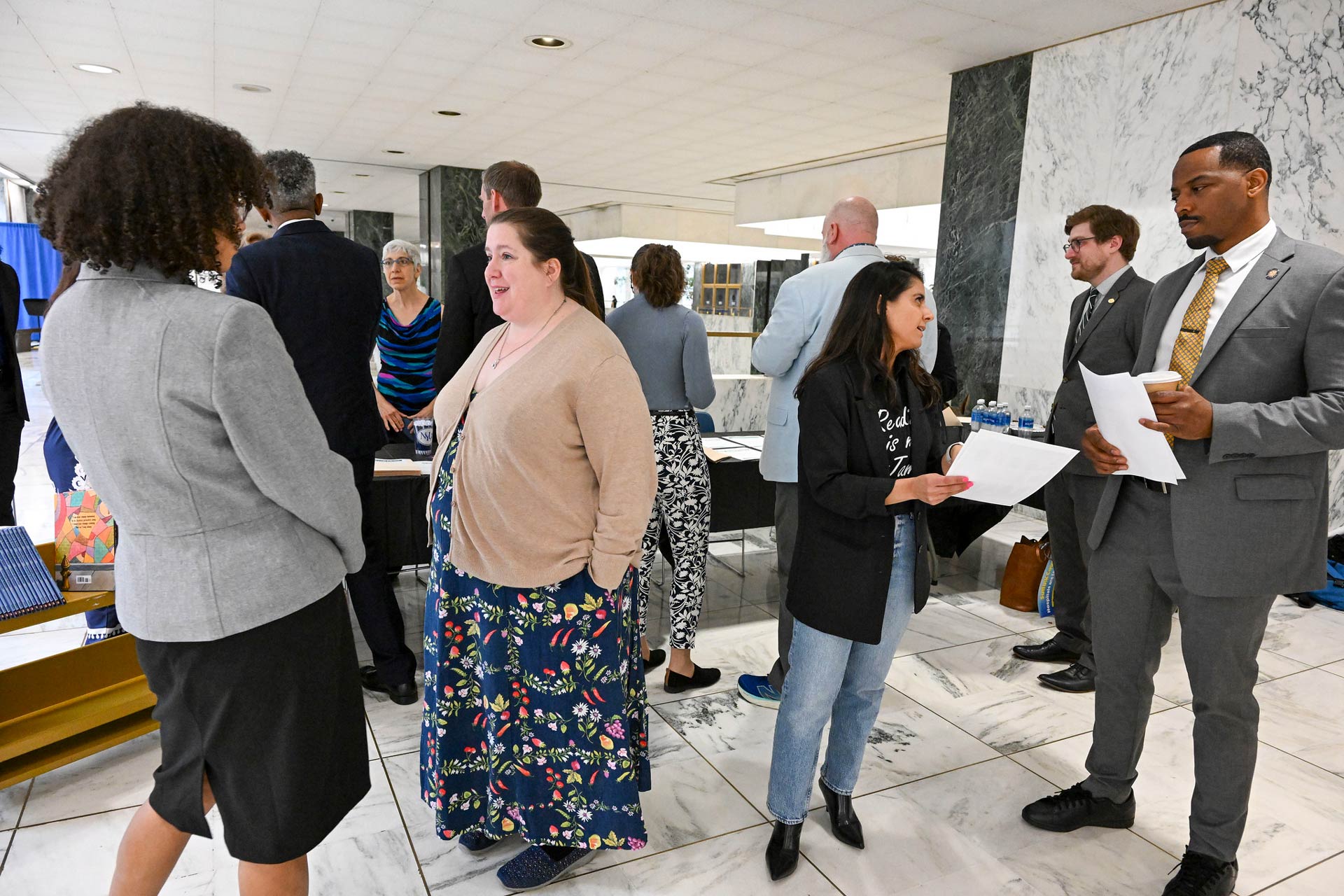 Caption: NYSUT library media specialists met with legislators to discuss the important role they play at the Open Books, Open Minds event last year.
Caption: NYSUT library media specialists met with legislators to discuss the important role they play at the Open Books, Open Minds event last year.
Caption: NYSUT library media specialists met with legislators to discuss the important role they play at the Open Books, Open Minds event last year.
“Today’s students live in an overwhelmingly complex media environment shaped by digital platforms, algorithmic filtering, and near-constant streams of information,” said social studies teacher Dean Bacigalupo, president of the Island Park Faculty Association and chairperson of NYSUT’s Social Studies Subject Area Committee. “The National Council for the Social Studies makes clear that preparing young people for democratic life requires building the skills to navigate and evaluate the media messages that shape public discourse.”
“In the current media landscape, students really struggle with understanding how to consume information and the news,” said Pierson Bell, social studies teacher at Medina High School and member of the Medina Teachers Association and NYSUT’s Social Studies Subject Area Committee. “We need the time and resources to be able to teach these skills in the classroom.”
“We need an informed citizenry,” said Patroulis. “We need to provide our students with the resources and skills that they'll need to be able to cut through the noise when they get out of our district.”
“Media literacy has to be embedded into as many curricula as possible. To do that, you need a school librarian in every school,” said Rosewood. “Every one of us has a Master of Library and Information Science. We are trained to teach information, including the acquisition of data, analysis, assessment — the works.”
“When we talk about preparing learners for the 21st century, we’re tying both arms behind our back if we don’t have trained specialists in the schools to help do this work.”
For more information about National News Literacy Week, visit the News Literacy Project: https://newslit.org/.
For more information on preparing students for civic readiness, visit DemocracyReady NY: https://www.democracyreadyny.org/.