NASA’s Orion spacecraft captures the Moon and the Earth in one frame during the Artemis II crew’s deep space journey at 6:39 p.m. ET on the sixth day of the mission. The right side of NASA’s Orion spacecraft is seen lit up by the Sun. A waxing crescent Moon is visible behind it. And then, a crescent Earth, tiny compared to the Moon, is about to set below the Moon’s horizon on the right. Credit: NASA.
Tim Glotch, Ph.D., professor and chair of the Department of Geosciences at Stony Brook University, describes himself as a science geek who has been into “space stuff” since he was a kid.
He has fond memories from his elementary school years of spending time outside with his dad on cold winter nights, looking through the telescope his parents gave him for Christmas. Years later, when Glotch was a college student studying physics and astronomy, he watched on a small dorm room TV as NASA’s Pathfinder mission landed on Mars, the first mission there since Viking decades earlier. As he watched, Glotch was struck by a new level of excitement about space exploration, and a new idea: he could study other planets in the same way that geologists study Earth. The concreteness of geology appealed to him immediately.
“Planets, even though they’re super far away, they’re more tactile, they’re made of rocks. You can hold a rock in your hands,” he said. “I’d never really thought about it that way.”
Because he was away from home on a summer research program at the time, he asked his parents to mail him a copy of his college’s course catalog so he could look up geology classes and begin the process of changing his major.
After graduating with a degree in astrogeophysics, Glotch continued his studies, earning a doctoral degree in geology. His mentor as a graduate student was a planetary geologist, which allowed Glotch to work on Mars Rover missions and orbiter missions and build the skills needed for his future career.
In his day-to-day work at Stony Brook, Glotch balances his own research in planetary geology with teaching and mentoring graduate students. This spring brought an exciting new opportunity as Glotch, along with nine other scientists from around the country, was selected to join NASA’s Artemis lunar surface science team. The team, working in tandem with NASA scientists, will develop a supporting science plan for the Artemis IV astronauts who are scheduled to land on the moon in 2028. Among the tasks they’ll be working on are mapping potential landing sites and working closely with the astronauts to plan collection of surface materials, including rocks that will be brought back to Earth for closer study.
“By analyzing those rocks, we can do science just like terrestrial geologists do. We can use those rocks to tell a story about the history of the moon. For me, that’s extremely exciting.”
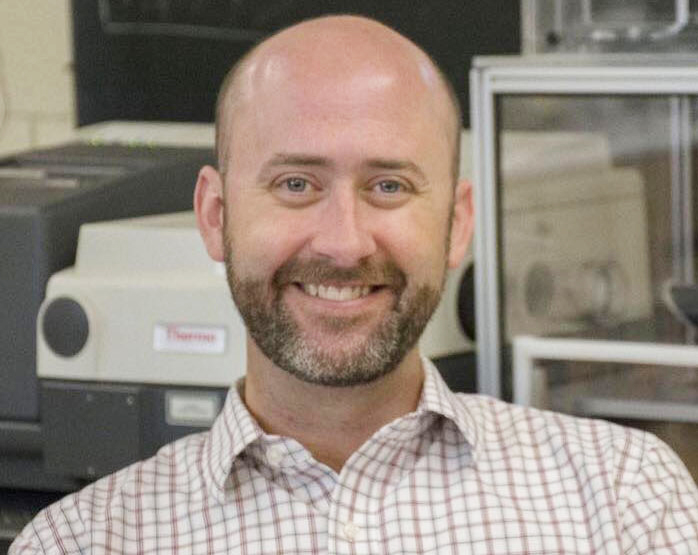 UUP Stony Brook member Tim Glotch
UUP Stony Brook member Tim Glotch
UUP Stony Brook member Tim Glotch
Glotch was thrilled to see how this year’s Artemis II mission caught the attention of people around the world and brought space exploration and beautiful images of the Earth and the moon into the public consciousness.
For many years, tragedies in the space program like Challenger and Columbia loomed large, and excitement about launches and missions could easily be clouded by fear. The success of Artemis represents a new era of hopefulness for the space program.
Glotch felt the excitement about Artemis in his own community, too; he got congratulations on his new role not just from colleagues and students on campus, but also from Facebook friends, his barber, other parents at his children’s school, and acquaintances he ran into around town. It was gratifying to have his own work recognized, but more importantly, it brought new energy to scientific discovery in space.
Glotch hopes that the attention around Artemis can inspire a new generation of scientists, engineers, and others, in the same way the Apollo missions did decades ago.
One of the great things about a mission to the moon, watched by people of all ages around the world, is that it doesn’t just inspire people to work in space science, said Glotch. It inspires cutting-edge research and life-saving discovery across a wide range of fields, including engineering, medicine, and countless others. It can set people on a brand-new path of exploration, just like watching the Pathfinder mission did for him.
Glotch has been asked a lot recently about whether he has any interest in going to space himself. For that, he has an easy answer: definitely not. But as Glotch makes clear, staying in one place doesn’t limit your ability to explore another. That’s part of what he loves about geology, and it is core to his philosophy as a teacher.
For Glotch, a United University Professions member whose mother was a math teacher for over 30 years, teaching is about expanding people's horizons and showing them what life was like or could be like in other places and other times.
While Glotch's teaching typically focuses heavily on the scientific element of a subject, like the geology of Mars, his new post with NASA allows him to emphasize a more human element in the classroom.
“Artemis is going to deliver great science, but it’s also about exploration,” said Glotch. “It’s a fun and interesting opportunity to think about how to combine the human exploration element with the science element to make something that’s really engaging, either at the introductory level or the advanced level.”
Glotch continued, “Geologists are master historians and interpreters, and we base our interpretations and the stories we put together off what we see in the present day, but we’re fundamentally interpreting the Earth’s record.”
By studying Earth in the present, we can learn more about the past, and by studying the moon and other planets, we can understand more about Earth, he said.
“It doesn’t bother me at all that I won’t go myself ... but at the same time, I can’t wait to get some of those rocks back in my lab and be part of the science that comes out of that exploration.”